Understanding Food Labels: What Labels Actually Mean
Understanding Food Labels: What Labels Actually Mean
A Simple Guide to Organic, Grass-Fed, Wild-Caught, and Avoiding Glyphosate
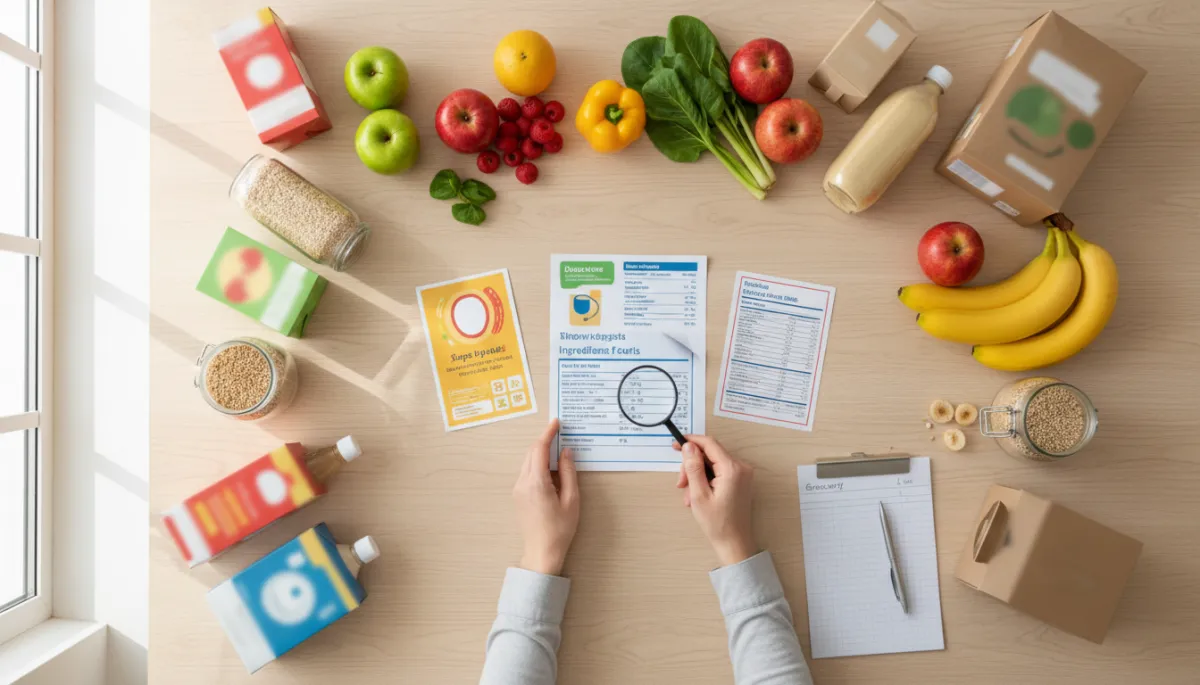
Food labels in the United States can be incredibly confusing.
“Natural.”
“Organic.”
“Grass-Fed.”
“Free-Range.”
“Wild-Caught.”
“Cage-Free.”
Many of these labels sound healthy, but they do not always mean what people think they mean.
I’ve even spoken with farmers selling eggs labeled “cage-free” when their chickens were actually pasture-raised. Their eggs were better than the label suggested. Even producers can be confused by food labeling standards.
This guide breaks down the most important food labels so you can make better choices for your brain, body, digestion, and long-term health.
Why Glyphosate Matters
One of the biggest reasons many people choose organic food is to reduce exposure to glyphosate.
Glyphosate is an herbicide heavily used in industrial agriculture and commonly sprayed on crops throughout the United States.
The International Agency for Research on Cancer (IARC) classified glyphosate as “probably carcinogenic to humans.”
Research has also linked glyphosate exposure to:
Gut microbiome disruption
Neurotoxicity
Hormone disruption
Oxidative stress
Organ damage
Important:
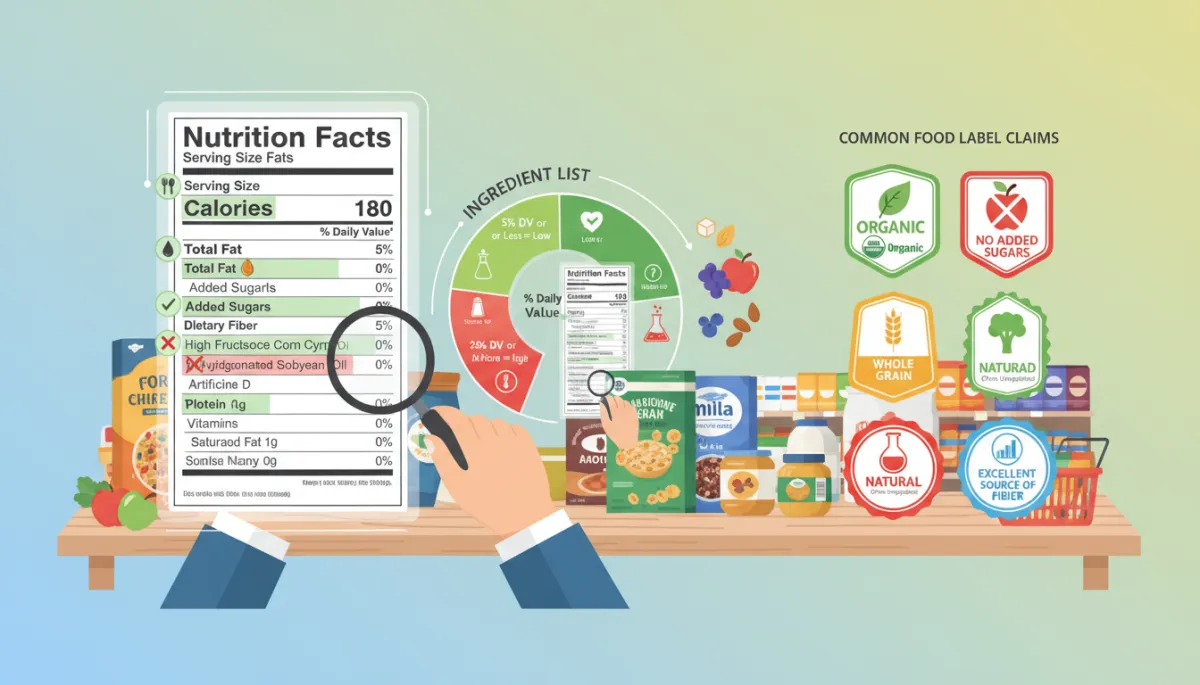
Non-GMO does NOT mean glyphosate-free.
A food can be labeled “Non-GMO” and still be sprayed with glyphosate.
Organic standards prohibit glyphosate use, which is one reason organic foods matter.

The Clean 15 & The Dirty Dozen
The Environmental Working Group (EWG) publishes annual lists called the Clean 15 and Dirty Dozen.
These lists help consumers identify which produce tends to have the lowest and highest pesticide residues.
Clean 15 (Lower Pesticide Residue)
These foods are generally safer conventional choices:
Avocados
Pineapple
Onion
Cabbage
Mangoes
Bananas
Kiwi
Mushrooms
Watermelon
Cauliflower
Many have protective peels or coverings that reduce pesticide exposure.
Dirty Dozen (Highest Pesticide Residue)
These are the most important foods to buy organic:
Strawberries
Spinach
Kale
Grapes
Apples
Peaches
Pears
Cherries
Potatoes
Blueberries
Simple Rule:
If you eat the skin or leafy surface, organic matters more.
Leafy greens and berries are especially important to buy organic whenever possible.

Wheat and Glyphosate
Many people think gluten is the only issue with wheat.
But conventional wheat is often sprayed with glyphosate before harvest to increase crop efficiency and profitability.
For many people, removing conventional wheat improves:
Digestion
Brain fog
Energy
Inflammation
Part of that improvement may come from reducing glyphosate exposure.
What Food Labels Actually Mean
Organic
Organic foods are produced without glyphosate and many synthetic pesticides.
When possible, organic is one of the best ways to reduce chemical exposure from food.
“Natural”
“Natural” has very little regulatory meaning.
A product can be labeled “all natural” and still contain highly processed ingredients, inflammatory oils, additives, and pesticide residues.
Cage-Free vs Free-Range vs Pasture-Raised
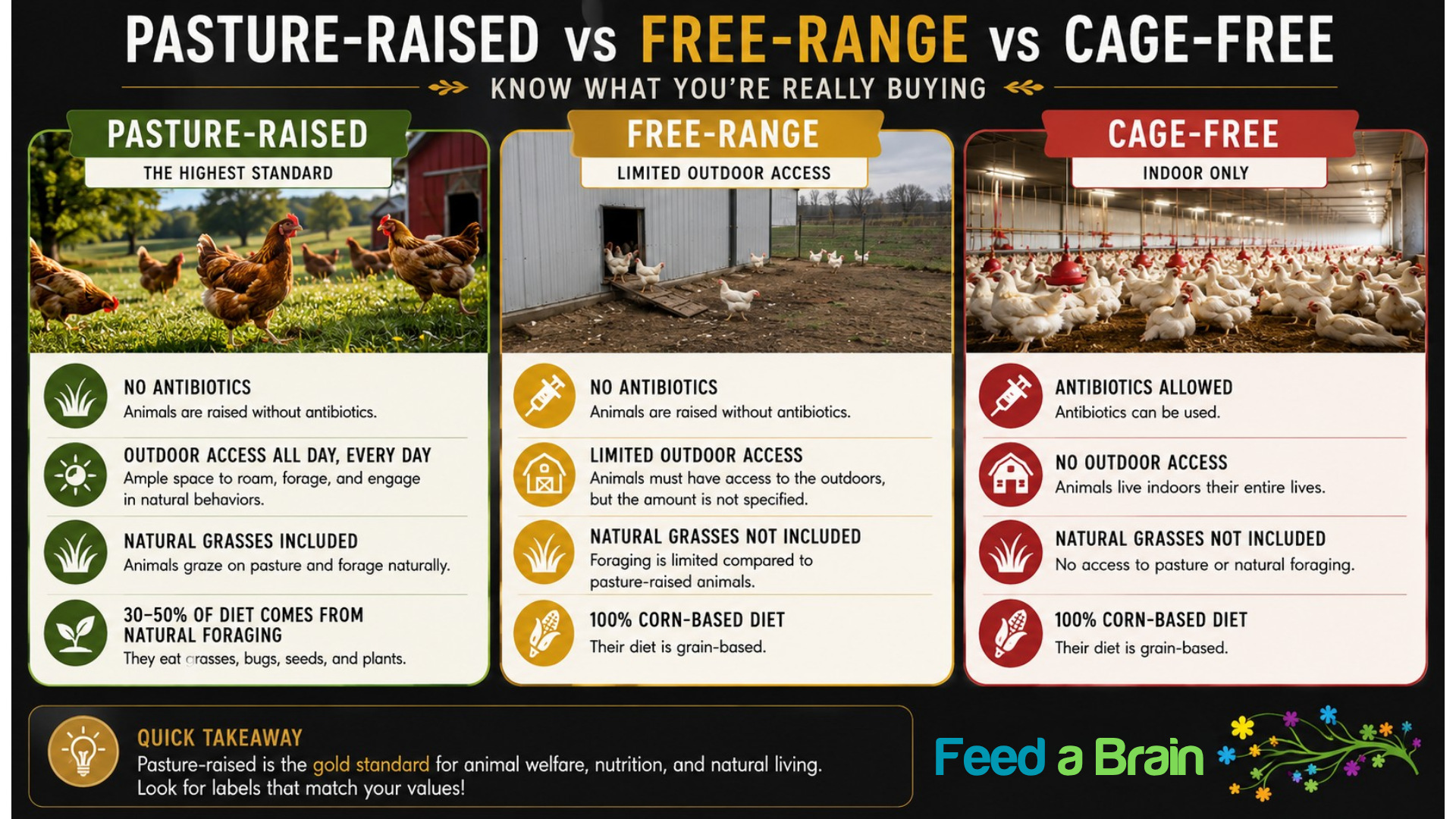
Cage-Free
Birds are not kept in cages, but they may still live indoors in crowded confinement facilities.
Free-Range
Birds technically have outdoor access, though it may be limited.
Pasture-Raised
Pasture-raised is the gold standard.
These animals actively roam outdoors, forage naturally, and live in more biologically appropriate environments.
Pasture-raised eggs generally contain:
Better fatty acid profiles
More omega-3s
Better nutrient density
“Vegetarian-Fed” Chickens
This label sounds healthy, but chickens are naturally omnivores.
They naturally eat:
Bugs
Insects
Worms
“Vegetarian-fed” does not necessarily mean healthier or more nutritious.
Pasture-Raised vs Grass-Fed
These labels are related, but not identical.
Pasture-Raised
Refers primarily to the animal’s living conditions and outdoor access.
Grass-Fed
Refers primarily to the animal’s diet.
An animal may technically be grass-fed while still spending time in confinement. Some cattle are still confined indoors and simply fed cut grass.
That is why many people prefer products that are both:
Grass-fed
Pasture-raised
For beef, one of the strongest certifications to look for is:
Best Label:
“Certified Grassfed by AGW”
AGW stands for A Greener World.
This certification has strong standards for:
100% grass-fed diets
Outdoor pasture access
Animal welfare

Wild-Caught vs Farm-Raised Fish
Wild-Caught Fish
Wild-caught fish live in their natural ecosystems:
Oceans
Rivers
Lakes
Wild-caught fish are generally preferred for:
Better fatty acid profiles
More natural diets
Less confinement
Farm-Raised Fish
Farm-raised fish are raised in aquaculture systems that can involve crowding and artificial feed.
When possible, wild-caught is typically the better option.
.png%3Fsfvrsn%3D8f0f562b_4&f=1&nofb=1&ipt=7302c5e8b9528c3eb2836fe5807351fba07ae2803cdd47a3bdeaa6646671508b "Sustainable Seafood Guide | Marine Stewardship Council")
Understanding Food Labels Is Empowering
Learning food labels is not about fear.
It is about awareness.
When we understand what labels actually mean, we can make more intentional decisions about what we bring into our homes, feed our families, and build our bodies and brains from.
That is incredibly empowering.
Food is one of the most consistent inputs we have into our biology. The quality of that food matters. Understanding labels like organic, pasture-raised, grass-fed, and wild-caught helps us navigate a food system that is often driven more by marketing and profit than transparency.
The goal is not perfection.
The goal is becoming more informed and more intentional over time.
Choosing organic berries instead of conventional when possible matters.
Choosing pasture-raised eggs matters.
Choosing wild-caught fish matters.
Reducing glyphosate exposure matters.
These small decisions compound over time.
And if we cannot make the perfect choice every time, that is okay too. Doing our best truly means doing the best we reasonably can within our environment, budget, access, and current season of life.
But the more we understand food labels, the more power we have to choose foods that better support:
Brain health
Energy
Digestion
Hormones
Inflammation
Long-term resilience
Knowledge creates options.
Awareness creates agency.
And learning how to navigate the modern food system is one of the most practical forms of health empowerment there is.
With curiosity and clarity,
Cavin